The Stable Business Series
The Organization Is the Product
Customers don't experience your mission statement. They experience your organization.
A founder can spend months refining a product and still give surprisingly little thought to the organization that will deliver it.
The offer is clear. The website looks good. The mission is compelling. Early customers respond. Then demand grows, and the questions become harder: Who follows up when something goes wrong? Can the team deliver the same quality next month? Are the people doing the work supported well enough to stay? Does the company have the money and systems to keep its promises?
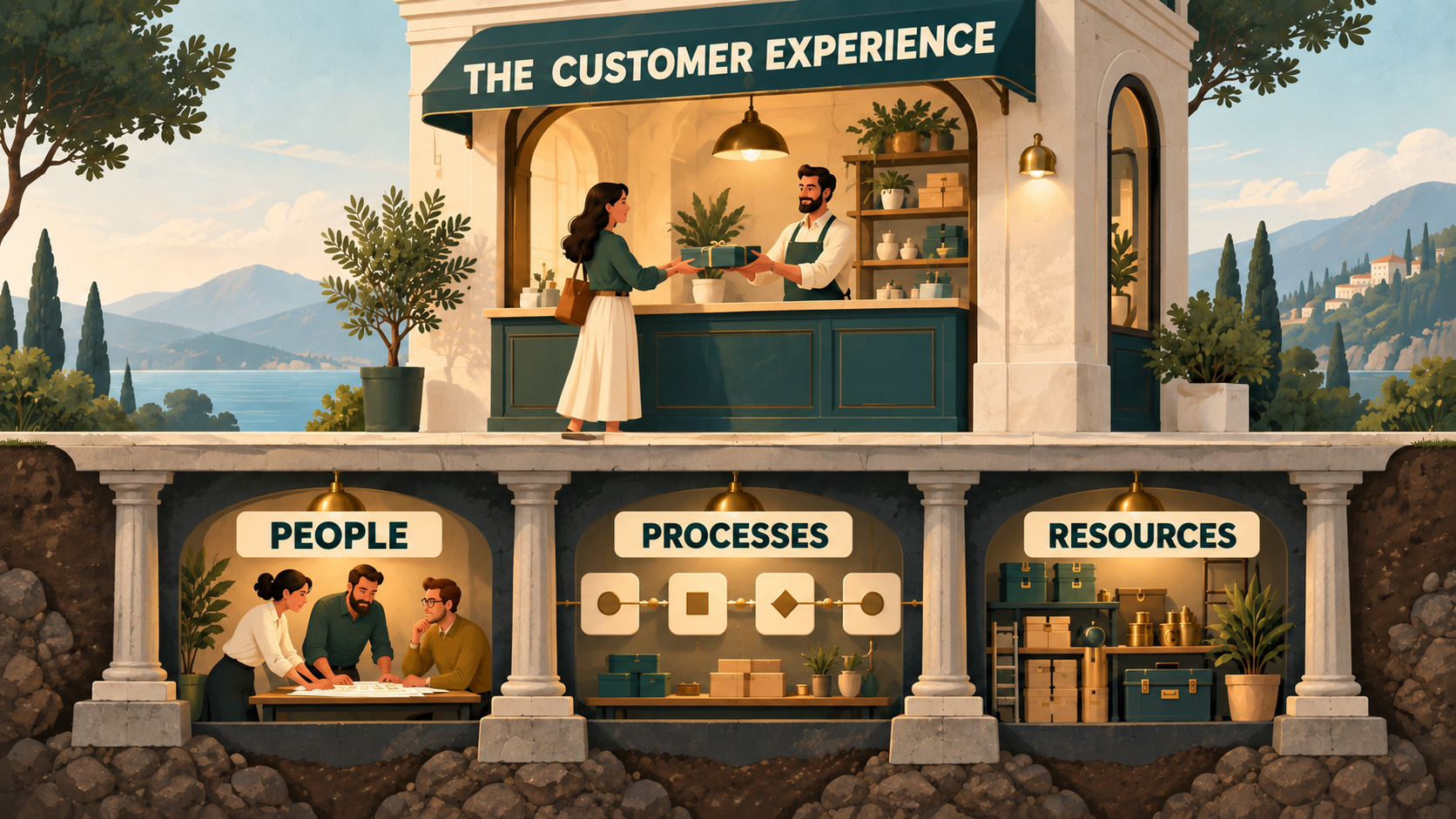
At that point, customers discover something the founder may not yet see: the organization is part of the product.
A customer does not experience your mission statement in isolation. They experience the response to their email, the accuracy of an order, the care taken with their information, and the way a problem is resolved. Partners experience your reliability. Employees experience your leadership. The community experiences the effects of your decisions.
All of those experiences shape what your product means in the world.
A Great Idea Needs a Way to Keep Its Promise
This matters especially for businesses built around a larger purpose. We often talk about impact as though it begins once a product reaches enough people. Reach matters, but reaching more people also puts more pressure on everything behind the offer.
If a wellness company grows while its team burns out, what kind of health is it creating? If a sustainability venture scales by shifting costs and waste elsewhere, how much has it changed? If a service promises connection but treats every interaction as a transaction, people will feel the gap.
These tensions do not mean a business must be perfect before it grows. They mean the business itself deserves the same attention we give its product.
In The Stable Business, I think of a company as having three essential legs: product, marketing, and the company that supports them. Product defines the value you create. Marketing connects that value with the people who need it. The company brings the people, resources, decisions, and systems together to deliver it consistently.
Strengthen only one or two legs and growth can expose the weakness of the third.
A better product cannot always compensate for poor service. More marketing can make operational problems arrive faster.
A capable team cannot sustain a business whose economics never work.
Build for the Experience You Want to Create
Thinking of the organization as a product changes the questions a founder asks.
Instead of asking only, “How do we get more customers?” we might also ask:
- What happens to someone after they say yes?
- Where are we relying on one person's memory or heroic effort?
- Which promises are becoming difficult to keep?
- What do our employees and partners experience when working with us?
- Will growth make the experience better, or simply make our weak points more visible?
These are design questions. The answers shape how a company hires, communicates, prices, measures success, and responds when things go wrong.
They also connect directly to people, planet, and profit. Those are often presented as competing priorities. In practice, each reveals something about whether the organization can endure.
This article is part of an evolving series exploring what it takes to build companies that are not only sustainable in what they offer, but stable, responsible, and resilient in how they operate. These ideas will be developed more fully in my forthcoming book, The Stable Business.